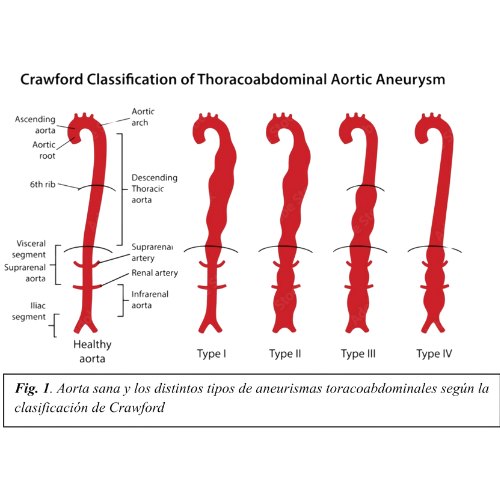
A thoracoabdominal aneurysm is a pathological dilatation of the aorta running between the thorax and the abdomen. The normal diameter of the descending thoracic aorta is between 23-30 mm and decreases to 19-20 mm below the kidneys. Growth of the thoracoabdominal aorta above 30 mm suggests disease at this level, while close monitoring is advised when diameters above 40 mm are reached.
Risk factors for aortic aneurysm at this level include previous dissections (tears in the wall of the aorta that separate its layers), age, smoking, poorly controlled hypertension, connective tissue diseases (Marfan syndrome, Loeys-Dietz and Ehlers Danlos syndrome), infectious or inflammatory diseases of the aorta, and trauma.
Fig. 1. Adobe Stock | 304385218
Why is important?
Dilatation of the aorta causes a weakening of the vessel wall. The progressive growth of this weakened wall increases the risk of dissection and/or rupture of the aorta, with a very high morbidity and mortality.
How can a thoracoabdominal aneurysm be repaired?
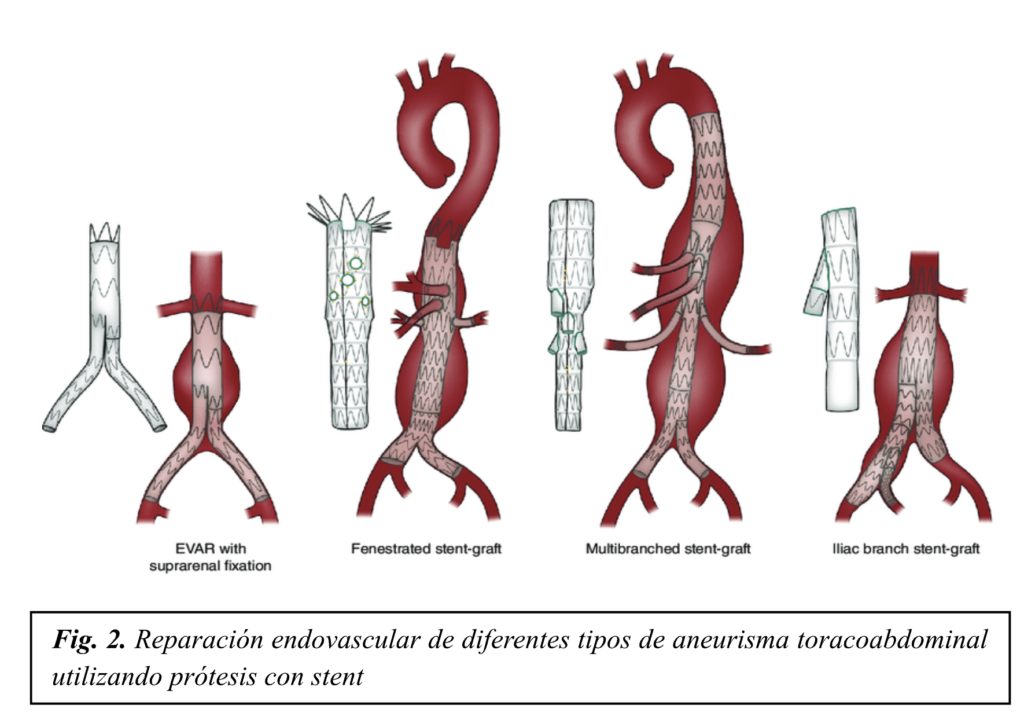
Currently, endovascular repair, which consists of implanting a prosthesis with a spring or stent through the groin that fits inside the aorta, is the first treatment option for patients with this pathology.
Fig. 2. Central and peripheral arterial diseases in chronic kidney disease: conclusions from a Kidney Disease: Improving Global Outcomes (KDIGO) Controversies Conference Johansen, Kirsten L.Ademi, Zanfina et al. Kidney International, Volume 100, Issue 1, 35 – 48
However, people with connective tissue disease or patients with a low chance of a good fit of the endovascular prosthesis to the aorta are not candidates for this approach. This is why open surgical repair still maintains a relevant role in the prognosis of the disease.
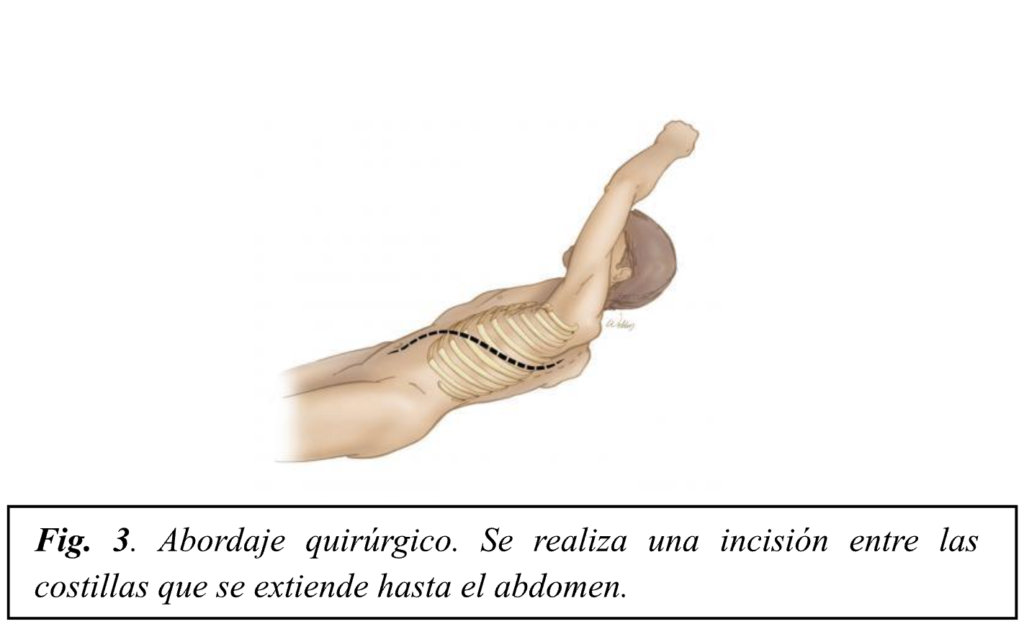
The surgical approach consists of an incision in the lateral chest and abdomen. To ensure the blood supply and the well-being of all abdominal organs, we connect the patient to an extracorporeal circulation pump that oxygenates and boosts the blood.
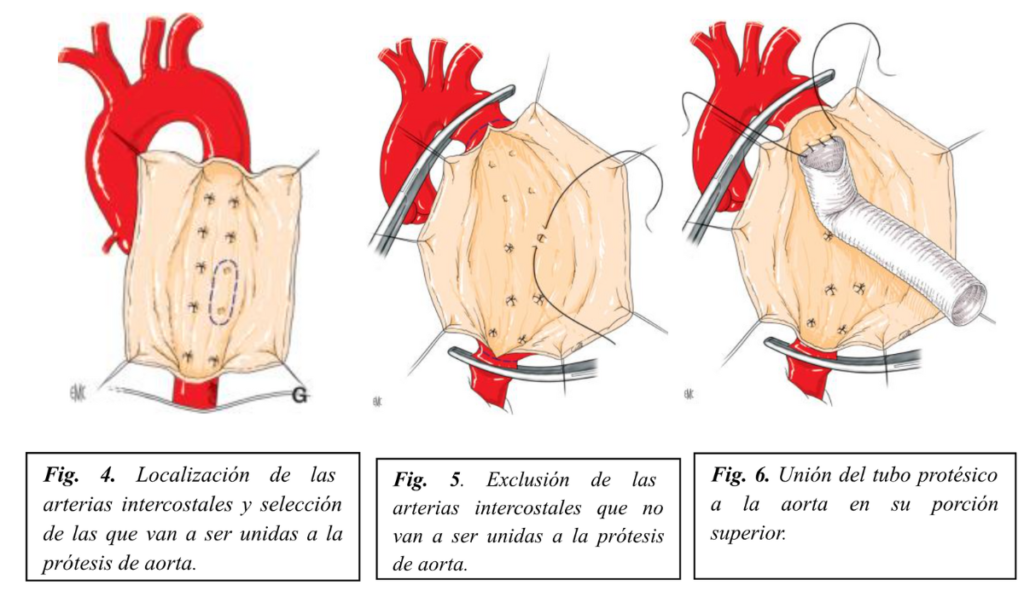
We then replace the diseased aorta with a flexible polyester tube (Dacron®). Finally, some intercostal arteries and visceral arterial branches are reattached to the prosthetic tube that will become the new aorta.
Fig. 3. Illustration by Scott Weldon.
Fig. 4-8. EMC. Canaud L, Alric P. Cirugía de los aneurismas de la aorta torácica y toracoabdominal. EMC - Cirugía general 2020;20(1):1-22 [Artículo E – 43-148-A].
What are the results of open repair of thoracoabdominal aneurysms?
In the short term, in patients undergoing planned surgery, mortality is below 10%. In addition to complications arising from impaired blood flow to abdominal organs (which is usually transient), there is a risk of paraplegia associated with insufficient blood supply to the spinal cord. This occurs in 2-4% of those undergoing surgery, although measures are increasingly being developed to prevent this. In the long term, the 5-year complication-free survival rate is over 70%.
It is important to know that full recovery from surgery will take 2-3 months. Post-operative cardiac rehabilitation will play a key role.
Fig. 9. EMC. LeMaire, S., Price, M., Green, S., Zarda, S., & Coselli, J. (2012). Results of open thoracoabdominal aortic aneurysm repair. Annals Of Cardiothoracic Surgery, 1(3), 286-292. doi:10.3978/j.issn.2225-319X.2012.08.16.
Why should you have surgery with our team?
We have seen that this is a highly complex surgery. For this reason it is essential to go to centres of excellence with extensive experience in the comprehensive treatment of aortic pathology. Our team not only has the experience, but also the human talent required and represented in the services of Cardiac Surgery, Anaesthesiology, Cardiology, Critical Care, Nursing and Rehabilitation, which will support your speedy recovery from the very first moment.
Este sitio utiliza cookies propias y de terceros para mejorar tu experiencia, analizar el tráfico y mostrar publicidad personalizada. Puedes aceptarlas todas, rechazar las no esenciales o configurar tus preferencias.
Cookies necesarias 3
Imprescindibles para que el sitio funcione. No se pueden desactivar.
Siempre activas
Nombre
Proveedor
Dur.
wordpress_test_cookie
WordPress
Sesión
PHPSESSID
PHP/Servidor
Sesión
ccd_cookie_consent
CCD Comunicación
1 año
Cookies analíticas 2
Nos permiten conocer cómo los visitantes usan el sitio.
Nombre
Proveedor
Dur.
_ga
Google Analytics
2 años
_gid
Google Analytics
24 horas
Cookies de marketing 2
Permiten mostrar anuncios personalizados.
Nombre
Proveedor
Dur.
_gcl_au
Google AdSense
3 meses
_gcl_aw
Google Ads
90 días
Cookies de preferencias
Guardan preferencias del usuario como idioma o región.