
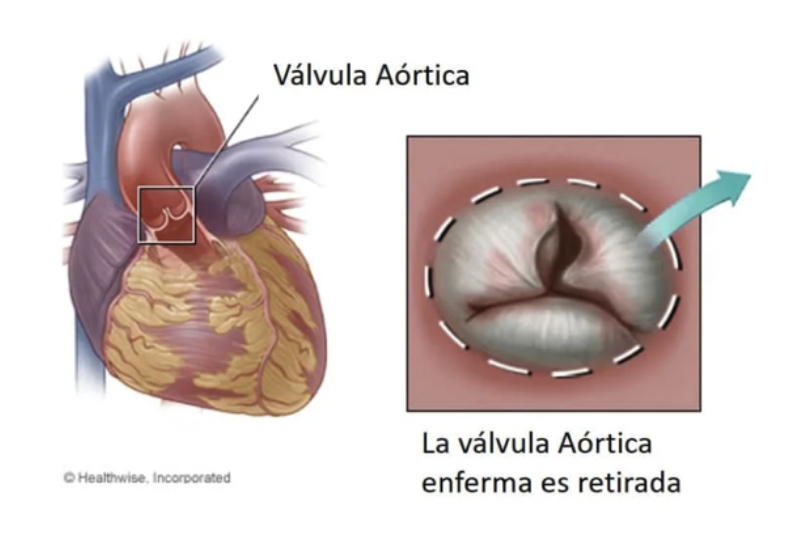
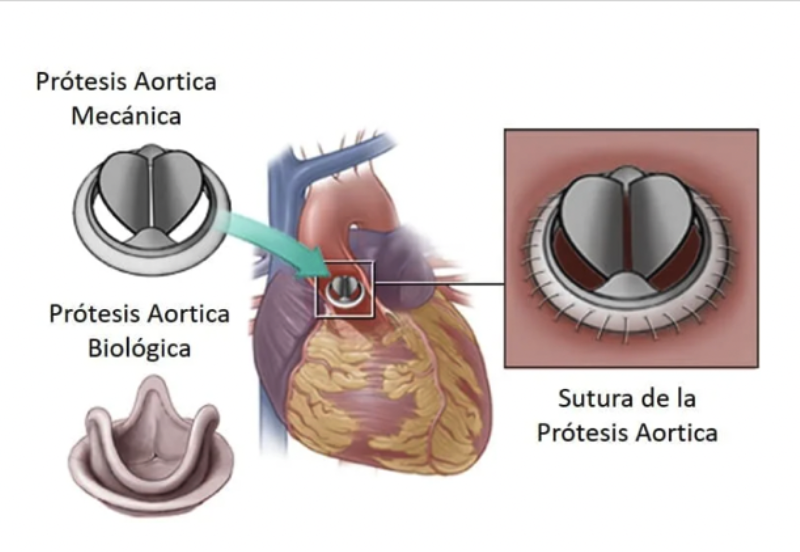
Mechanical or biological valve prostheses have been implanted for many years and have benefited many patients. Classically, mechanical prostheses were indicated in young patients and biological prostheses in elderly patients. However, there are complications inherent to the use of valve prostheses, based, among others, on the risk of lifelong oral anticoagulation in patients with mechanical prostheses and on structural degeneration with the need for reoperation in those with biological prostheses.
Patients with mechanical prostheses present a very considerable risk of thrombosis and bleeding, with an annual incidence of these complications of 2-4% patient/year.
Patients with biological prostheses have a risk of structural deterioration with the need for reoperation that ranges from 20-25% in patients > 65 years of age and 60% in patients < 65 years of age.
For this reason, at the end of the 1980s, aortic valve repair and preservation techniques emerged to avoid the disadvantages derived from mechanical prostheses and to try to achieve greater durability and freedom of reoperation than biological prostheses. These techniques act on the valve leaflets, on the valve annulus and on the aorta itself.
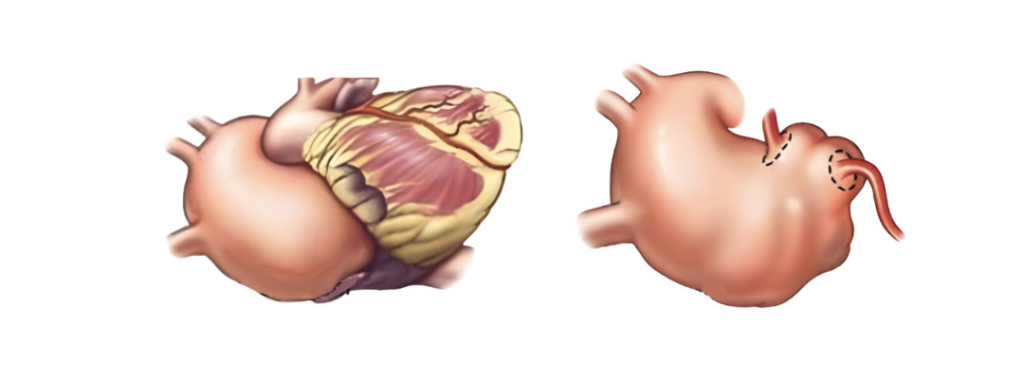
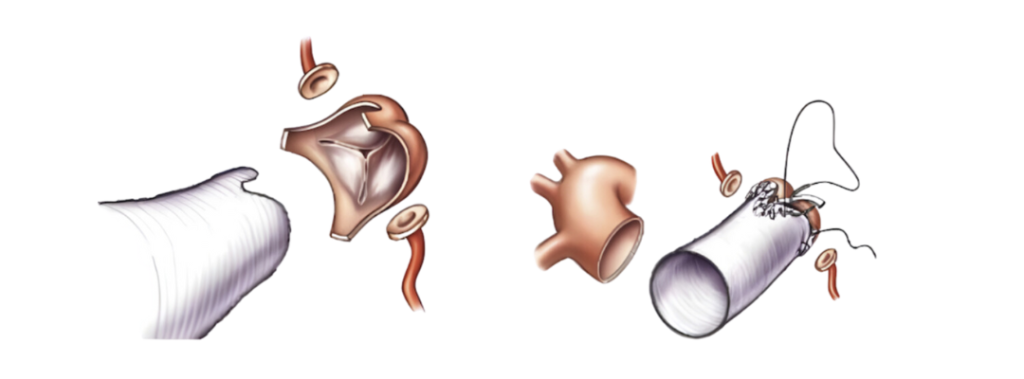
Aneurysm of the sinuses of Valsava (initial portion of the aorta)
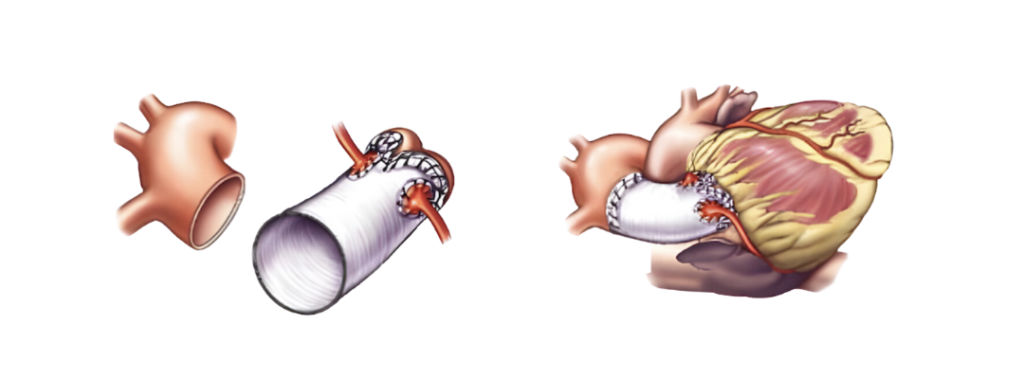
Final appearance of aortic valve and coronary artery reimplantation
Aneurysm resection preserving the aortic valve and reimplantation of the aortic valva inside a Dacron conduit.
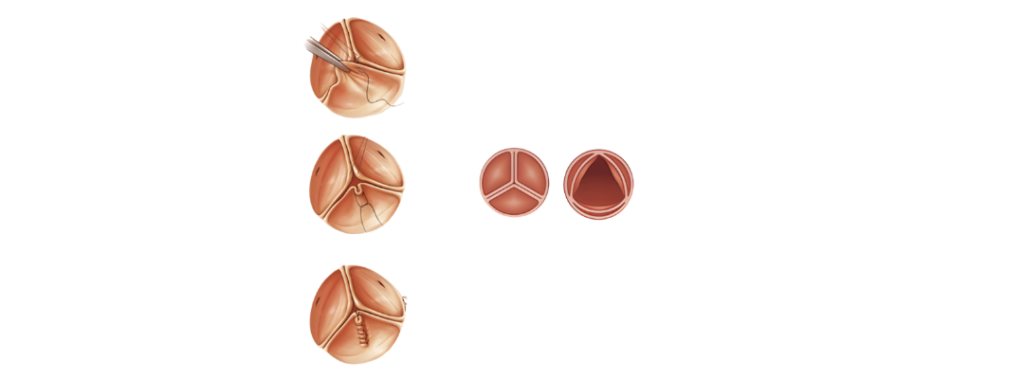
Veil plication technique to correct aortic prolapse and aortic insufficiency. On the right can be seen the perfect closure of the leafflets with this technique.
Enable maximum physical activity as the native valve offers better hemodynamics than those achieved with any prosthesis. These techniques are ideal for young patients and high-performance athletes.
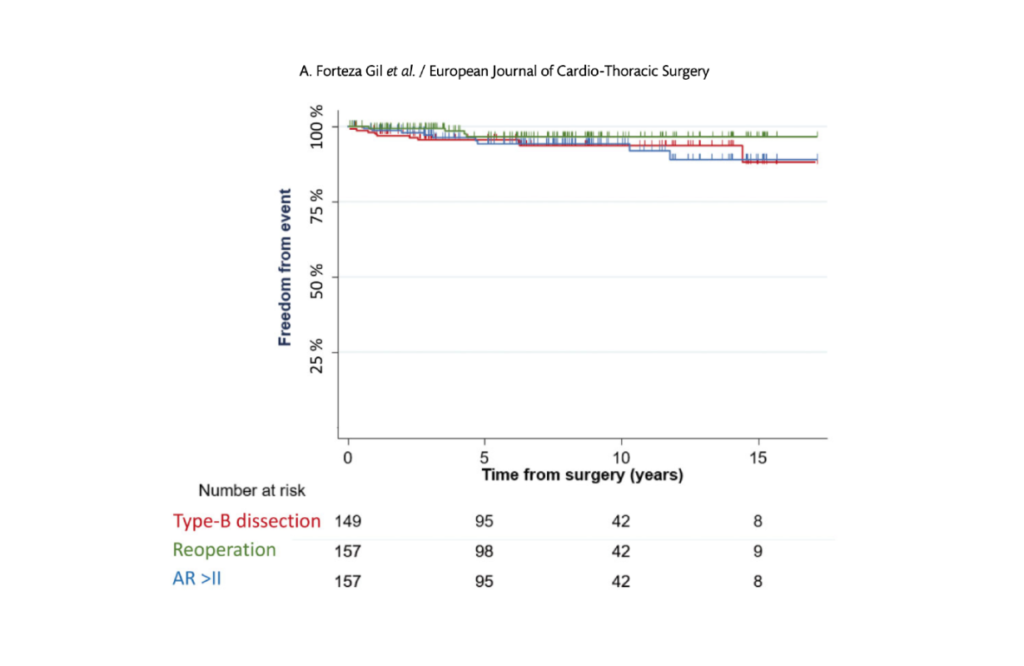
Longer durability than bioprosthesis with a probability of remaining free of reoperation in the long term > 90%.
Allow pregnant women
to have a completely normal pregnancy.In-hospital mortality is similar between repair versus aortic valve replacement, and is very low in expert centers (<1%).
In addition, these techniques achieve greater durability than those obtained with biological prostheses, keeping patients free of anticoagulant treatment and with a much lower risk of suffering valve infection (endocarditis).
This allows them to quickly return to normal life and enables them to carry out completely normal physical and sporting activities.
We reported recently our experience with David technique in one of the largest series in the world of marfan syndrome patients, and present the follow-up long term results. The durability of valve repair in these patients is excellent and clearly superior to that of biological prostheses.

Hospital Universitario Quironsalud Madrid
Calle de Diego Velazquez 1
28223 Pozuelo de Alcarcón
(Madrid)
Teléfono: (+34) 648 764 149
info@aorticrepaircenter.com
Hospital Universitario La Luz Quironsalud
Calle de Maestro Ángel Llorca 8
28003 Madrid
Teléfono: (+34) 648 764 149
info@aorticrepaircenter.com
©2025 Aortic Repair Center Copyright All Right Reserved.
Este sitio utiliza cookies propias y de terceros para mejorar tu experiencia, analizar el tráfico y mostrar publicidad personalizada. Puedes aceptarlas todas, rechazar las no esenciales o configurar tus preferencias.
Imprescindibles para que el sitio funcione. No se pueden desactivar.
| Nombre | Proveedor | Dur. |
|---|---|---|
wordpress_test_cookie |
WordPress | Sesión |
PHPSESSID |
PHP/Servidor | Sesión |
ccd_cookie_consent |
CCD Comunicación | 1 año |
Nos permiten conocer cómo los visitantes usan el sitio.
| Nombre | Proveedor | Dur. |
|---|---|---|
_ga |
Google Analytics | 2 años |
_gid |
Google Analytics | 24 horas |
Permiten mostrar anuncios personalizados.
| Nombre | Proveedor | Dur. |
|---|---|---|
_gcl_au |
Google AdSense | 3 meses |
_gcl_aw |
Google Ads | 90 días |
Guardan preferencias del usuario como idioma o región.
